Best Compressed Air Cleaner Solutions for Your Needs?
When it comes to maintaining a clean working environment, choosing the right Compressed Air Cleaner is essential. Compressed air systems can introduce dust, moisture, and oil into processes, harming equipment and product quality. Understanding your specific needs will help you make an informed decision.
Various options are available, each with unique features and benefits. Some cleaners are designed for specific industries, while others offer versatility across multiple applications. It's crucial to consider factors such as flow rate, efficiency, and maintenance requirements. This will ensure you select a solution that fits your operational demands.
While many solutions promise high efficiency, not all deliver on that promise. Research and user reviews can provide insights into the effectiveness of different models. Budget constraints may also limit choices, making it vital to balance cost with quality. Ultimately, finding the best Compressed Air Cleaner for your needs requires careful thought and exploration.
Overview of Compressed Air Cleaner Technologies
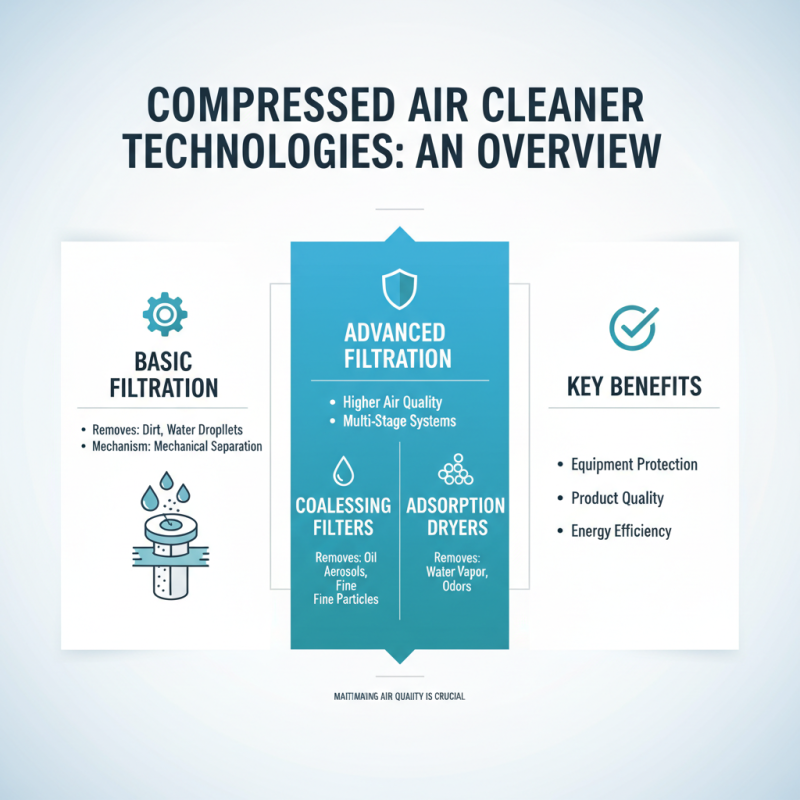
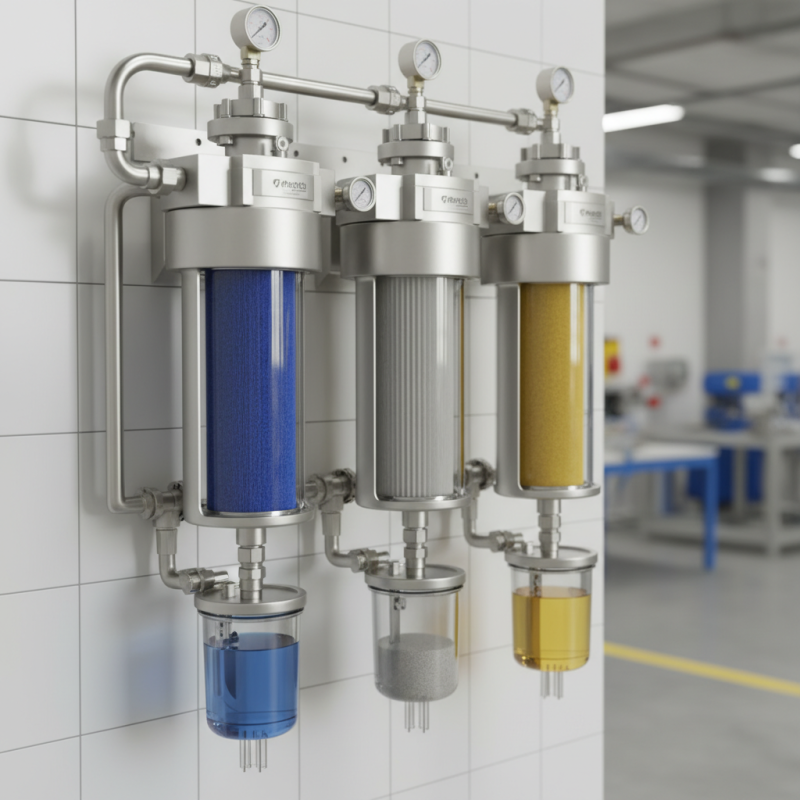
When considering compressed air cleaner technologies, understanding the different available options is crucial. technologies play a vital role in maintaining air quality. Simple systems may remove dirt and moisture, but advanced models offer additional filtration levels. Common types include coalescing filters and adsorption dryers, each with distinct mechanisms.
Coalescing filters work by forcing air through a filter medium. This design captures water, oil, and particulates effectively. Conversely, adsorption dryers utilize desiccant materials to eliminate moisture. They are vital in preventing equipment damage. However, these systems require regular maintenance, as their efficiency depends on proper upkeep.
Choosing the right technology may not be straightforward. Potential users must assess their specific needs. Some applications may demand higher purity levels than others. Understanding your requirements is necessary for optimal performance. Moreover, the initial cost can be misleading; ongoing maintenance expenses also impact long-term value.
Types of Compressed Air Cleaners and Their Applications
When considering compressed air cleaners, it's essential to understand the different types available and their specific applications. One common type is the particulate filter. These filters capture dust and other solid particles from the air. They are crucial in industries where clean air is necessary for equipment functioning properly. For instance, manufacturers rely heavily on these filters to maintain machine efficiency.
Another popular option is the coalescing filter. This type effectively removes water and oil aerosols from compressed air systems. They are vital in food and beverage processing, where air purity directly affects product quality. The right choice of a coalescing filter can prevent contamination and ensure product safety.
Activated carbon filters are also prevalent. They specialize in removing odors and volatile organic compounds. They are beneficial in applications where air quality is a top priority. However, they may require frequent maintenance and replacement, which can be a downside for some users. Understanding these options can help users select the best compressed air cleaner for their needs. Reflecting on potential limitations is critical for effective decision-making.
Best Compressed Air Cleaner Solutions for Your Needs
| Type of Compressed Air Cleaner |
Applications |
Advantages |
| Particle Filters |
General industrial use, manufacturing processes |
Removes dust and solid particles, improving air quality |
| Coalescing Filters |
Painting, textile, and food processing industries |
Removes water and oils, preventing contamination |
| Activated Carbon Filters |
Pharmaceutical and chemical industries |
Eliminates odor and volatile organic compounds (VOCs) |
| Desiccant Dryers |
Electronics manufacturing, food processing |
Lower humidity levels, protecting sensitive equipment |
| Refrigerated Dryers |
General industrial use, air compressors |
Cost-effective, reliable for reducing moisture |
Key Factors to Consider When Choosing a Compressed Air Cleaner
When choosing a compressed air cleaner, several key factors play a critical role. Efficiency stands out as a top priority. An efficient cleaner will maximize air quality while minimizing energy consumption. Understanding the specific needs of your environment helps narrow down your options. A facility with heavy dust may require a more robust system compared to a clean room.
Another important consideration is the filtration technology used. Different technologies offer varied levels of filtration. Some systems remove larger particles while others can filter out microscopic contaminants. It's essential to evaluate the specifications of each technology for your requirements. Noise levels can also affect workplace comfort. A quieter unit may enhance productivity in environments where focus is paramount.
Lastly, think about maintenance needs. Some air cleaners have filters that require frequent changes, leading to increased operation costs. A cleaner with longer-lasting filters may reduce these costs. However, choosing a cleaner shouldn't solely depend on convenience. Regular checks are necessary to ensure continued performance and compliance with safety standards. The right compressed air cleaner is one that balances these various factors, meeting both your operational needs and budgetary constraints.
Best Compressed Air Cleaner Solutions for Your Needs
Maintenance Tips for Optimal Performance of Compressed Air Cleaners
Compressed air cleaners play a critical role in various industries, ensuring the purity of air used in manufacturing processes. Regular maintenance of these systems is essential for optimal performance. According to the Compressed Air and Gas Institute (CAGI), about 70% of compressed air system issues stem from poor maintenance. Simple practices can prevent these problems.
Change filters regularly to avoid contamination. CAGI recommends a filter change at least every six months, depending on usage. Monitoring pressure drops can provide insight into filter efficiency. When pressure drop exceeds 5 psi, it’s time for a change. Improper maintenance can lead to higher energy costs, averaging an additional 30% per year.
Additionally, ensure that there is no moisture buildup in the system. Moist air can damage equipment and lead to product quality issues. Regularly inspecting drains and using inline separators is advisable. A recent industry report highlighted that neglecting moisture control can result in up to 25% equipment failure rates. Understanding these factors can enhance system reliability and save costs.