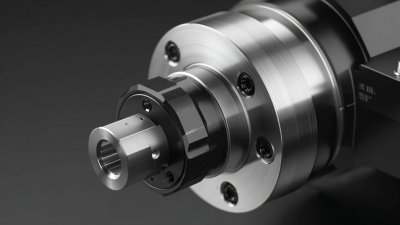
How to Choose the Best Spindle Angle Head?
Choosing a Spindle Angle Head is not just a matter of matching a tool to a spindle. The right unit must fit the machine interface, reach the feature, and withstand the cutting forces. A head that looks suitable in a catalog may still collide with a fixture or exceed the machine’s load limits. Small details matter. For example, a few degrees of clearance can determine whether a cutter reaches a deep side pocket without repositioning the workpiece.
Automation is increasing the value of flexible machining. The International Federation of Robotics reported 4.28 million industrial robots operating worldwide in 2023, a 10% increase from the previous year. That figure does not measure angle-head demand, but it reflects a broader move toward automated production and repeatable processes. In that setting, tool changes, setup time, accuracy, and serviceability deserve careful attention. A compact head can reduce setups, yet it may add reach, vibration, or maintenance demands. There is no universal winner.
This guide explains how to compare spindle interfaces, transmission types, speed and torque ratings, lubrication, and coolant options. It also considers machine compatibility, workpiece geometry, and the manufacturer’s support. Check the machine manual and confirm specifications with the supplier before purchase. Real shops sometimes discover an overlooked clearance issue only after installation. That is worth admitting: published specifications cannot replace a trial fit or a verified machining plan.

Understanding Spindle Angle Head Types and Their Applications
Choosing the right spindle angle head starts with the workpiece, not the machine catalog. A fixed-angle head suits repeatable operations, such as drilling a row of holes across a sloped face. An adjustable head offers more flexibility when part geometry changes, but setup and verification take longer. Check the required angle, tool reach, spindle speed, and available clearance before selecting one.
Different head types solve different access problems. Right-angle heads direct the tool sideways, helping machine features that a straight spindle cannot reach. Compact heads can fit into narrow spaces, though their smaller size may limit cutting capacity. Tilting heads support angled surfaces and varied operations, but added joints can affect rigidity. That trade-off matters. A faint chatter mark on a deep pocket may signal that the setup is too flexible, not that the tool needs more speed.
Application details should guide the final choice. Consider material, cutting forces, coolant access, and how often the head will be repositioned. For a short run, manual angle adjustment may be practical; repeated production may benefit from a more consistent positioning method. Confirm the head’s interface and load limits with reliable technical documentation, then test it on a representative part. I would not choose by angle range alone. Reach can look adequate on paper and still fail around a real fixture.
How to Choose the Best Spindle Angle Head?
Understanding common spindle angle head types and their applications
The chart compares nominal cutting-axis angles relative to the machine spindle: straight heads are suited to axial operations, 45° heads provide angled access, and 90° right-angle heads reach side faces. Adjustable and universal heads can cover variable orientations; confirm their usable range, rigidity, clearance, and machine compatibility in the specific model’s specifications.
Evaluating Machine Compatibility and Required Spindle Specifications
How to Choose the Best Spindle Angle Head?
Evaluating Machine Compatibility and Required Spindle Specifications
Start with the machine, not the angle head. Check the spindle interface, taper, retention method, drawbar force, and available clearance. A head that fits the taper may still exceed the machine’s allowable mass or torque. Measure the work envelope with the tool installed. A few millimeters can decide whether the head clears a fixture or strikes a guarding panel.
Compare spindle speed, power, torque, and duty cycle with the actual cutting process. Do not rely on maximum speed alone. Small cutters may need high rpm, while large tools require torque at lower speeds. Verify allowable radial and axial loads, coolant delivery, and tool-change access in the machine documentation. ISO 10791-6:2014 outlines tests for machining-center accuracy, including rotary-axis performance; ISO 230-2:2014 addresses positioning accuracy and repeatability. These standards offer useful reference points when reviewing machine test data. Ask suppliers for measured runout at the tool nose, test conditions, and results at working speed—not just unloaded specifications. The detail is easy to miss. A catalog value without test conditions tells you less than it seems. And real setups are rarely perfect. Check the proposed combination under your own tooling, fixture, and cutting conditions before committing.
Checking Accuracy, Rigidity, Cooling, and Maintenance Features
How to Choose the Best Spindle Angle Head?
Accuracy should be checked under real cutting conditions, not only from a catalog sheet. Measure spindle runout with a calibrated test bar and a fine dial indicator. Keep the target below 0.01 mm when precision work demands it. Measure at the tool tip. Small errors grow across long cutters. Repeat the test after warming the spindle, because thermal expansion can change alignment. Measure it cold. Then measure again.
Rigidity controls surface quality, tool life, and vibration during heavy milling. Inspect the housing, bearing arrangement, and locking mechanism for signs of flex. A rigid angle head should hold its position when cutting hardened steel or deep pockets. Shorter tool projection usually improves stability. Do not judge rigidity by weight alone. I once trusted a heavy housing and overlooked a weak locking interface.
Cooling design deserves equal attention. Internal coolant passages can clear chips from deep features and reduce cutting heat. Check the maximum pressure, flow direction, and seal protection before installation. External nozzles may work well for open cuts, but they can miss enclosed corners. Watch for heat around the bearing area after continuous operation. Excessive warmth often signals poor lubrication, overload, or restricted coolant flow.
Maintenance should be practical for the machine operator. Look for accessible grease ports, replaceable seals, inspection points, and clear service intervals. Check whether the angle head needs special fixtures for adjustment. Record runout, temperature, vibration, and lubrication dates in a simple log. Service instructions matter. A precise head can still fail when maintenance is difficult or frequently postponed.