- sales@bjbod.com
- Mon - Sat at 7:00AM to 9:00PM
Leave Your Message
- E-mail
- Whatsapp

China’s machining supply chain supports a wide range of Toolholder Collet manufacturers and suppliers. Their products serve CNC milling, turning, drilling, and automated production lines. However, supplier selection requires more than comparing catalog prices.
The International Federation of Robotics reported 276,288 industrial robots installed in China during 2023. That figure represented about 51% of global installations. Such automation increases demand for stable clamping, repeatable runout, and reliable tool changes. Gardner Research also reported global machine tool consumption of approximately 85.7 billion US dollars in 2022. These figures show the market’s scale, but they do not identify the best collet supplier.
This guide evaluates China-based manufacturers through practical and technical criteria. These include material quality, heat treatment, concentricity, balancing capability, inspection equipment, and export experience. It also considers compatibility with ER, TG, OZ, and other common systems. Relevant standards, including DIN 6499 and ISO 15488, provide useful reference points. Yet standards alone cannot guarantee consistent production.
A polished website is not proof of manufacturing strength. Buyers should request inspection records, sample measurements, and clear tolerance data. Factory audits can reveal details that product photos hide. Even experienced purchasers may overlook packaging quality or replacement support. That weakness deserves attention.
The following overview highlights established Chinese Toolholder Collet manufacturers and suppliers. It separates genuine production capability from simple trading activity. Supplier rankings can change, so readers should verify current certifications, machinery, lead times, and customer references before placing orders.
Toolholder Collets Explained: ER Sizes, DIN 6499, and ISO 15488
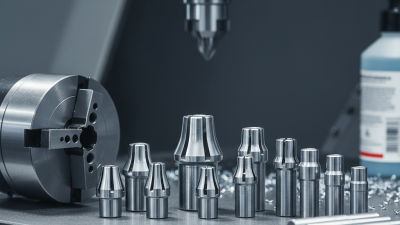
ER collets are spring-steel sleeves used to grip cutting tools inside compatible holders. Common sizes include ER8, ER11, ER16, ER20, ER25, ER32, ER40, and ER50. The number indicates the collet family, not the exact tool diameter. A standard ER collet usually clamps across a 1 mm range. For example, a 10–9 mm collet can hold tools between those dimensions. Smaller ranges often improve gripping consistency. Check the actual specification.
DIN 6499 provides dimensional guidance for ER collets, holders, and related interfaces. ISO 15488 is also used when defining collet dimensions and performance requirements. These references help buyers compare products from different manufacturers. However, compliance alone does not guarantee excellent machining results. Taper accuracy, heat treatment, surface finish, and tested runout matter greatly. A collet may look polished but still perform poorly under high-speed rotation.
Practical inspection should include a clean taper, smooth slots, and even closing pressure. Measure runout with a calibrated gauge and a test bar. Keep the tool, collet, nut, and holder matched as one system. Chinese manufacturers and suppliers can offer strong value, but technical documents deserve careful review. Ask for inspection records, material details, balancing grades, and tolerance data. One detail is easy to miss: dirt inside the taper can imitate a defective collet. That mistake costs time. Sometimes, the specification sheet is incomplete, and that should invite further questions rather than quick approval.
| ER Collet Size | Typical Clamping Range (mm) |
Common Nominal Shank Range (mm) |
Relative Tool Capacity | Typical Application | Selection Considerations |
|---|---|---|---|---|---|
| ER Collet Size and Application Reference | |||||
| ER8 | 0.5–5 | 1–5 | Extra-small | Micro machining, engraving, small drills and miniature cutters | Suitable for light cutting loads and compact toolholders; use only within the specified range. |
| ER11 | 0.5–7 | 1–7 | Small | Small-diameter milling, drilling, engraving and precision routing | Offers better rigidity than ER8 while retaining a compact nose diameter. |
| ER16 | 1–10 | 1–10 | Small to medium | General-purpose machining with small and medium cutting tools | A common choice where compact size and moderate gripping capacity are required. |
| ER20 | 1–13 | 1–13 | Medium | Drilling, milling, tapping and light-to-medium CNC machining | Provides a useful balance between tool capacity, accessibility and rigidity. |
| ER25 | 1–16 | 1–16 | Medium | General CNC milling, drilling and toolholding operations | Choose when a wider gripping range is needed without moving to a larger ER body. |
| ER32 | 2–20 | 2–20 | Medium to large | General-purpose milling, heavy drilling and machining centers | Widely used for larger cutters; adequate holder rigidity and balanced assembly are important. |
| ER40 | 3–26 | 3–26 | Large | Large-diameter milling, drilling and higher-load machining | Suitable for substantial tool shanks, but the larger nose may reduce access in confined areas. |
| ER50 | 6–34 | 6–34 | Extra-large | Large-tool machining, heavy-duty drilling and high gripping-force applications | Requires a compatible large ER holder, nut and machine interface; verify clearance before use. |
| Standards, Geometry and Technical Selection Criteria | |||||
| DIN 6499 | Common reference for ER collet dimensions and related toolholder interfaces | Standard reference | Used when matching ER collets, nuts and toolholders | Confirm the exact ER series, form, length, thread and permissible accuracy with the supplier. | |
| ISO 15488 | International standard covering ER-type spring collets with cylindrical shanks | International reference | Useful for checking dimensional compatibility across suppliers | Standards compliance does not by itself define every performance grade or runout class. | |
| Collet Form | Common ER collets are available in standard, sealed or other application-specific forms | Application-dependent | Dry machining, coolant-through-tool use and specialized operations | Use a sealed design only when its coolant pressure and tool-shank requirements are suitable. | |
| Material | Typically hardened spring steel manufactured for repeated elastic deflection | Heat-treated component | Repeated tool changes and secure radial gripping | Check hardness, heat-treatment quality, surface finish and corrosion protection. | |
| Runout Performance | Depends on collet grade, holder, nut, cleanliness, balance and assembly accuracy | Precision-critical | High-speed cutting and operations requiring consistent tool life | Evaluate the complete holder assembly rather than the collet alone; use the manufacturer’s measured specification. | |
| Clamping Rule | The tool shank should match the collet’s stated range; do not force a collet beyond its designed compression range | Essential requirement | All ER toolholding applications | Use the correct metric or inch collet. Avoid mixing nominal sizes unless the collet specification explicitly permits it. | |
| Assembly Practice | Insert the collet into the nut before installing the assembly into the holder | Recommended procedure | Preventing incorrect seating and uneven gripping | Clean the taper, collet slots, nut threads and tool shank; tighten with a calibrated torque wrench. | |
| Inspection Points | Check taper condition, slot damage, deformation, corrosion, cleanliness and tool seating | Maintenance requirement | Periodic quality control and preventive maintenance | Replace collets showing permanent deformation, damaged slots or inconsistent gripping. | |
| Metric and Inch Compatibility | Metric and inch collets may have overlapping nominal ranges but are not automatically interchangeable | Compatibility warning | Mixed-tool inventories and international procurement | Use the correct collet series and dimensional specification for the actual tool shank. | |
| Supplier Evaluation Criteria | Dimensional inspection, material traceability, heat-treatment control, balancing capability and quality documentation | Procurement criteria | Industrial purchasing and production qualification | Request inspection reports, tolerance data, sample testing and applicable standard references before volume orders. | |