China’s industrial growth makes dependable wastewater treatment a practical priority. An Industrial Oil Water Separator removes free oil from water before discharge, reuse, or further treatment. The right system can protect downstream equipment and reduce visible oil carryover. Performance depends on more than the nameplate: flow rate, oil droplet size, temperature, and maintenance all matter. A separator facing oily wash water may need a different design from one treating stormwater runoff.
Market figures offer context, but they need careful reading. Grand View Research estimated the global oil-water separator market at approximately USD 1.03 billion in 2022 and projected growth through 2030. This is a commercial market estimate, not a measure of separator performance or plant-level savings. Buyers should compare specifications, test conditions, and service support—not just headline capacity. A compact unit can look impressive on a brochure. Real wastewater is less tidy.
China’s manufacturers serve varied sectors, including manufacturing, transport, and energy. Their product ranges may include gravity, coalescing-plate, and packaged treatment systems. Yet published specifications do not always reveal how a unit performs under changing loads. Requesting application references and clear operating data is sensible.
A named expert quotation cannot be responsibly verified from the materials provided, so none is attributed here. That matters: invented authority weakens trust. This guide compares China’s leading manufacturers through product design, documented capabilities, customization, and after-sales support. Buyers should still confirm that each model suits their wastewater and site conditions.
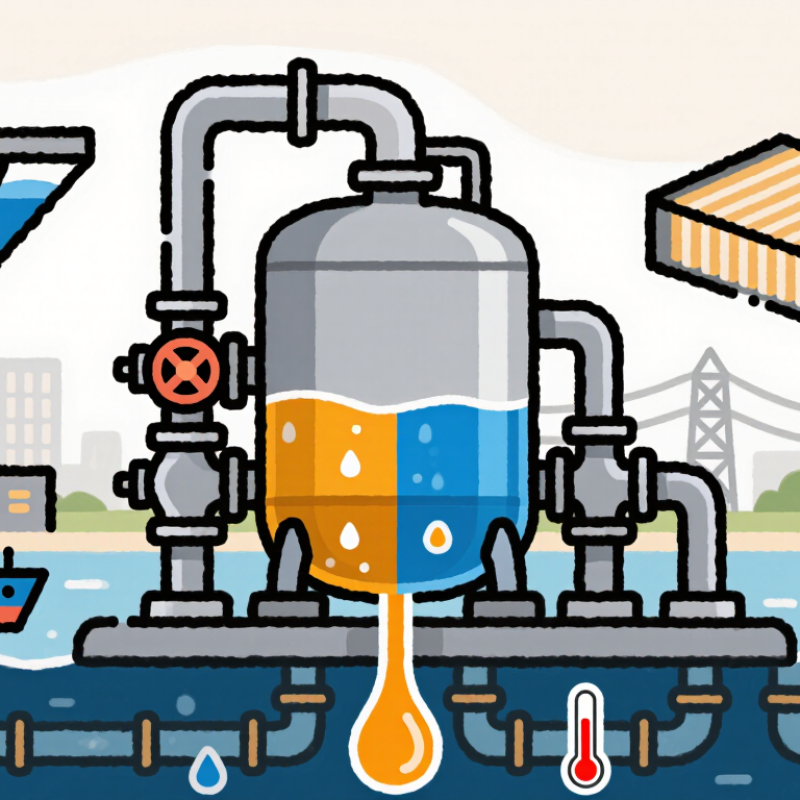
Industrial oil-water separators reduce free oil in wastewater before it reaches further treatment or discharge. In a typical gravity unit, wastewater slows inside a tank. Because oil is less dense than water, larger droplets rise, while heavier solids settle. A skimmer removes the floating oil; collected sludge needs separate handling. Simple, but not foolproof.
API Publication 421, Design and Operation of Oil-Water Separators, uses removal of free oil droplets around 150 microns and larger as a conventional gravity-separation design basis. Actual performance depends on flow, temperature, droplet size, and oil properties. Baffles can calm turbulence, while coalescing plates help small droplets join and rise faster. Dissolved or strongly emulsified oil usually needs additional treatment. A clear outlet is not proof that all oil has been removed.
Tips: Check for an oil sheen and inspect the sludge layer routinely. Keep flow steady; sudden surges can carry oil past the outlet. Treat 150 microns as a design reference, not a universal guarantee.
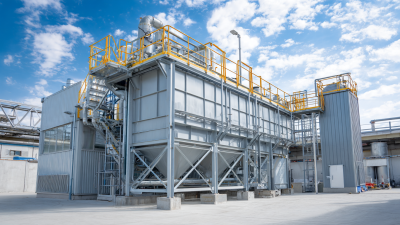
China’s industrial oil-water separator manufacturing landscape includes equipment workshops, component suppliers, and engineering firms serving varied process needs. Some manufacturers build compact units for maintenance bays, while others design larger systems for factories, transport depots, and wastewater pretreatment. Stainless-steel tanks, coalescing media, pumps, and control panels are common elements.
Production capability alone does not show whether a unit will perform well on site. Buyers should compare inlet flow, oil type, temperature, solids loading, and required outlet quality. A separator tested with clean water may behave differently when exposed to detergent, fine grit, or fluctuating flows. Ask for drawings, material specifications, operating limits, and documented test conditions.
The market offers standard models and project-specific packages, but customization can add lead time and maintenance complexity. Check how media is replaced, how sludge is removed, and whether sensors are accessible without dismantling the tank. Factory inspections and reference installations can help verify workmanship, though a visit cannot replace performance data. Some specifications remain unclear. A sound supplier relationship depends on practical service support, clear commissioning guidance, and realistic claims, not simply a low quotation or polished catalog.
Chinese manufacturers commonly supply gravity separators, coalescing-plate units, flotation systems, and compact treatment skids. Gravity models slow wastewater so free oil rises into a collection chamber. Coalescing plates help small droplets combine into larger ones. Dissolved-air flotation uses fine bubbles to lift oil and suspended solids for skimming. No magic box. Each process suits different water conditions.
The American Petroleum Institute’s API Publication 421 and the US EPA’s Oil/Water Separators fact sheet use roughly 150-micrometre oil droplets as a conventional gravity-separation benchmark. This is a design reference, not an outlet guarantee. Emulsified oil, detergents, and changing flow can reduce performance. Some suppliers also offer membrane polishing or automatic oil skimmers for downstream treatment and surface collection. Buyers should compare rated flow, oil concentration limits, plate spacing, sludge access, and cleaning requirements. A 1,000-litre-per-hour rating means little if peak flow doubles during washing. A specification sheet can look reassuring; it cannot replace a wastewater sample test or pilot run. I would check that point carefully.
China Top Industrial Oil Water Separator Manufacturers
Evaluating a Chinese industrial oil-water separator manufacturer starts with your wastewater, not its catalogue. The UN World Water Development Report 2017 estimated that over 80% of wastewater worldwide was released without adequate treatment. This figure is not specific to oily industrial effluent, but it shows why treatment claims need verification. Ask suppliers to document oil concentration, flow range, temperature, pH, and whether the oil is free, dispersed, or emulsified. These details help determine whether gravity separation, coalescing media, or additional treatment is suitable. Small details matter.
Request test results using a sample of your actual water, including inlet and outlet oil levels, sampling method, and operating duration. Test it. Compare performance at peak flow, not only with a calm laboratory feed. The World Bank’s 2019 Quality Unknown report linked severe water pollution with up to one-third lower downstream economic growth. This is not a separator performance benchmark, but it underlines the cost of weak discharge control. Check construction materials, spare-part availability, cleaning access, energy use, and service intervals. A polished brochure is not proof. Ask for references from similar industries and a site acceptance plan with measurable limits. A short pilot is still useful, even when the calculations look convincing. Real wastewater can be less cooperative.
Compare a separator’s tested outlet concentration with the applicable discharge limit. China’s GB 8978-1996 sets petroleum limits of 5, 10, and 20 mg/L for Classes I, II, and III, respectively. Actual project requirements depend on the receiving-water category, local permits, and other applicable standards.
When assessing manufacturers, request independently verifiable performance test reports and confirm that test conditions and outlet limits match your project’s requirements. Source: China National Standard GB 8978-1996, Integrated Wastewater Discharge Standard.
Industrial oil-water separators serve machine shops, vehicle wash bays, food plants, and maintenance depots. They remove free oil from wastewater before discharge or reuse, but performance depends on oil type and flow. A quiet workshop drain may still face sudden surges after floor washing. Small details matter.
When comparing manufacturers, estimate average and peak flow, oil concentration, temperature, detergent use, and available floor space. Check whether wastewater contains free oil, emulsified droplets, or solids; gravity separation handles free oil more readily. Fine emulsions may need additional treatment. Request test data from conditions close to your process, not only a best-case rating. Materials should tolerate the wastewater chemistry, and access panels should remain reachable without moving heavy equipment. Selection is rarely perfect.
Maintenance starts with routine checks. Inspect inlet screens, measure accumulated oil, and remove settled sludge before it restricts flow. Log operating conditions, cleaning dates, and unusual odors or visible carryover. A clear outlet is useful, but visual checks alone cannot confirm water quality. Sample periodically, especially after changing cleaners or production schedules. Follow the equipment manual and applicable discharge requirements; service intervals vary with loading. Operators may skip records during busy shifts. That is understandable, but it makes gradual performance changes harder to detect.