2026 Best Compressed Air Filter for Industrial Use
Compressed air looks clean at the outlet. It may not be. Water droplets, rust, pipe scale, and oil aerosols can reach valves, tools, and product-contact equipment. The right Compressed Air Filter helps control these contaminants, but selection is not simply a matter of choosing the finest element. Filter grade, flow rate, operating pressure, maintenance interval, and pressure drop all affect performance.
The U.S. Department of Energy’s Improving Compressed Air System Performance: A Sourcebook for Industry reports that compressed air can account for about 10% of industrial electricity use, and considerably more in some facilities. That makes pressure loss worth attention: an undersized or clogged filter can add avoidable load to a system. ISO 8573-1:2010 provides a classification framework for particles, water, and oil in compressed air; it does not prescribe one filter for every plant. Compressed-air auditor Ron Marshall’s system-level guidance points to a practical principle: assess filtration alongside the whole compressed-air system, not as an isolated purchase. The best choice depends on measured air quality and actual demand.
Details matter. A dusty shop, a damp compressor room, and a clean instrument-air line do not present the same filtration problem. Yet product comparisons often hide operating costs behind a low purchase price. That is an easy mistake. This 2026 guide examines filter types, efficiency, pressure drop, service life, and application fit, while noting where specifications need verification with manufacturers. No single model is best for every industrial use.
What Industrial Compressed Air Filters Do
Industrial compressed air filters protect equipment and product quality by removing solid particles, liquid water, and oil aerosols from airflow. A particulate element traps rust and pipe scale; a coalescing element gathers fine liquid droplets so they can drain away. Activated-carbon media can reduce oil vapors and odors, but it does not replace a dryer. Water vapor needs separate treatment.
The ISO 8573-1 standard classifies compressed-air purity by particle, water, and total-oil content. That gives plant teams a useful way to specify air quality at the point of use, rather than choosing one filter for every line. A clean instrument-air branch may need tighter control than a general workshop line. Small droplets matter. Filters also protect valves, pneumatic tools, and sensitive process equipment from contamination-related wear.
A filter can create a problem when its element is clogged or undersized. Pressure loss rises, and downstream machines may receive less usable air. The U.S. Department of Energy’s Improving Compressed Air System Performance sourcebook estimates compressed-air systems use about 10% of industrial electricity, making avoidable pressure loss worth monitoring. Check differential-pressure readings and drain function during routine inspections. In practice, maintenance schedules can slip; a recorded reading is more useful than assuming the element is still clean.
Common Contaminants in Compressed Air Systems
Compressed air can look clean while carrying moisture, oil, and fine particles through a plant’s pipework. Water may collect in low points, then spit from a hose when demand rises. Rust flakes and seal debris can also travel downstream, especially in older lines. Small particles matter. They can score pneumatic valves, clog narrow orifices, and mark a finished surface. Oil aerosols from lubricated compressors may leave a thin film on tools or products. The amount varies with compressor type, maintenance, and operating conditions.
Contamination is not always visible. Water vapor can pass through a particle filter, so drying equipment may be needed when dew point matters. Oil vapor may require a different treatment stage than liquid droplets. A filter should match the contaminant, flow rate, and required air quality; one element rarely solves every problem. Check differential pressure and drain function during routine service. A blocked element can restrict flow, while a failed drain may send collected water back into the line. Easy to miss. Sampling at the point of use can reveal what a central inspection overlooks. Even then, results need context: production changes, temperature, and pipe condition can shift the contaminant load. A clean gauge reading is useful, but it is not proof of clean air.
Types of Filters Used in Industrial Applications
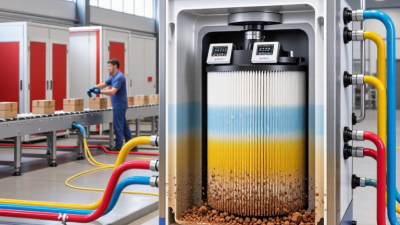
Industrial compressed-air systems rarely rely on one filter. Particulate filters catch rust, pipe scale, and other solid debris. They are often installed upstream to protect valves and tools. Coalescing filters remove liquid water and oil aerosols by gathering tiny droplets into larger ones. A drain then carries the liquid away. Check the drain regularly; a blocked one can let collected moisture re-enter the air line.
Activated-carbon filters serve a different purpose. They reduce oil vapors and odors, often near sensitive processes or at the point of use. They do not replace particulate or coalescing stages. Filter choice depends on the compressor, piping, required air quality, and the equipment being supplied.
Too fine a filter can create excess pressure drop, raising energy use and reducing tool performance. Watch the pressure gauge. A clean bowl can be misleading: some contaminants are invisible, and filter media can become saturated before an obvious change appears. Service records and air-quality testing help reveal what visual checks miss. It is tempting to install one filter everywhere, but that may waste energy or leave a process underprotected.
How to Select an Industrial Air Filter in 2026
2026 Best Compressed Air Filter for Industrial Use
How to Select an Industrial Air Filter in 2026
Choose a filter by the air quality required at the tool or process, not by the compressor outlet alone. ISO 8573-1 classifies compressed-air purity for particles, water, and total oil; the required class depends on the application. A packaging line and a general workshop may need different treatment. Check flow demand, operating pressure, temperature, and the filter’s rated performance under those conditions. The U.S. Department of Energy notes that compressed air can account for a substantial share of industrial electricity use. Even a modest pressure drop can add avoidable energy costs. Small details matter.
Tips: Compare pressure drop at your actual flow, not just the filter’s connection size. Check element replacement intervals and verify that drains work. A filter cannot remove water vapor like a dryer can.
Use ISO 12500 test methods to compare filter performance, and review the manufacturer’s test conditions before buying. Install stages suited to the contaminants: particulate filtration for solids, coalescing filtration for liquid aerosols, and adsorption where vapor removal is required. Monitor pressure gauges across the housing; a rising differential pressure can signal a loaded element. Don’t overspecify blindly. Extra filtration may increase pressure loss, while an undersized unit can pass contaminants or restrict flow. Selection is sometimes less tidy than a chart suggests, so confirm results with operating data after installation.
Filter Installation, Monitoring, and Maintenance
An industrial compressed-air filter works as intended only when its installation suits the system’s flow and operating conditions. Check the flow arrow before connecting the housing, and leave room to remove the element without disturbing nearby pipes. Mount the unit securely, away from excessive heat, vibration, and direct impact. Small detail. Fit the correct drain arrangement and route condensate to a suitable collection point. Before opening the housing, isolate the line and release pressure according to site procedures. A bypass can help keep production running, but it must not allow untreated air to reach sensitive equipment unnoticed.
Monitor differential pressure across the filter and check downstream air quality against the needs of the process. A gauge alone can feel reassuring, yet it cannot confirm that the outlet air is dry or clean enough. Inspect drains for sticking or blockage, and look for leaks around seals during routine checks. Replace elements according to the manufacturer’s limits and actual operating conditions, not simply because a calendar date has arrived. Dust loading and moisture vary. A weak point in many maintenance routines is recording only the replacement date; note pressure readings, drain condition, and any unusual oil or water carryover as well. These records help teams spot gradual changes before they become production problems.
2026 Best Compressed Air Filter for Industrial Use
Filter Installation, Monitoring, and Maintenance
Differential pressure is a practical indicator for monitoring filter condition. These example readings show pressure drop rising from 8 kPa after installation to 35 kPa at a service alert. Follow the filter manufacturer’s specified limits; actual readings depend on the filter, airflow, and operating conditions.