How to Choose the Right Tapping Machine Collets?
Choosing the right Tapping Machine Collets is a small decision with measurable consequences. A poorly matched collet can cause tap slippage, oversized threads, damaged workpieces, and unnecessary downtime. The correct choice depends on tap size, shank geometry, machine connection, material, coolant method, and required torque control.
Industry data supports careful selection. The Association for Manufacturing Technology’s U.S. Manufacturing Technology Orders reports show continuing investment in automated and precision machining equipment. Reports from the International Federation of Robotics also document broader factory automation growth. These trends make reliable tooling more important, not less. In a faster cell, a small gripping error can repeat hundreds of times before anyone notices.
Start with the machine manual.
Check the collet’s range, tolerance, and compatibility with the tap holder. Synchronized tapping may require a rigid or tension-compression design. Floating systems can help absorb minor alignment errors, but they are not a substitute for accurate setup. For stainless steel, hardened alloys, or deep holes, torque control and chip evacuation deserve special attention.
W. Edwards Deming, a widely respected manufacturing quality expert, said, “Quality comes not from inspection, but from the improvement of the production process.” That principle applies directly here. Measure thread quality, tool life, runout, and changeover time. Then compare the results.
The checklist will not be perfect. It may overlook operator habits or coolant contamination. Still, choosing Tapping Machine Collets through documented testing is safer than relying on price, appearance, or a supplier’s broad compatibility claim. A collet should fit the machine, the tap, and the actual production conditions. That last requirement is often missed.
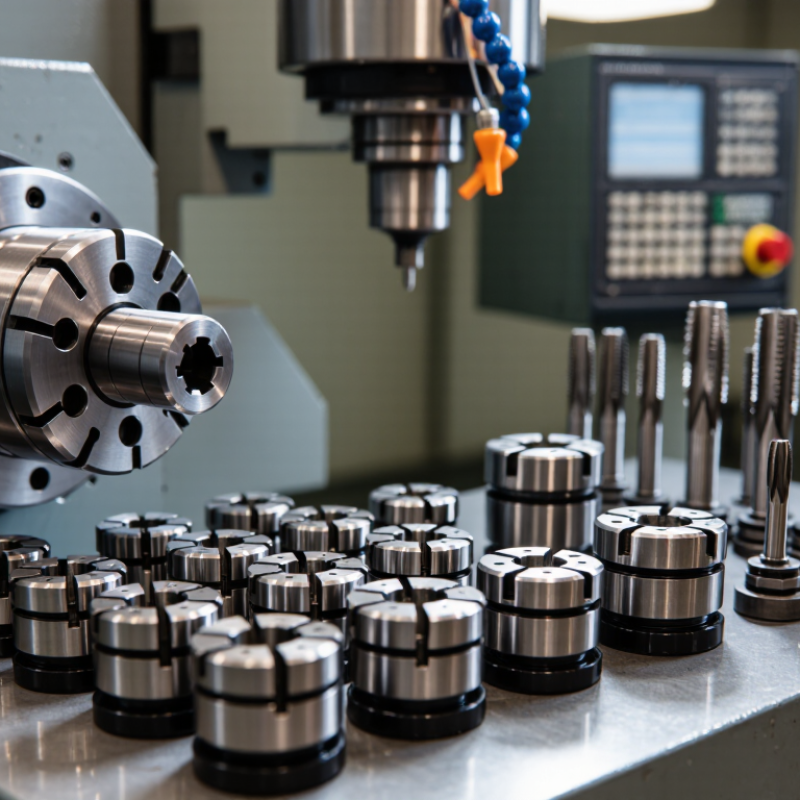
Understanding Tapping Machine Collet Types and Their Functions
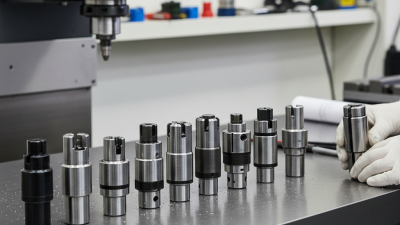
Choosing the right tapping machine collet starts with understanding its type and function. A collet is more than a holder. It controls grip, alignment, and tapping stability.
Quick-change collets support fast tool replacement, which helps during repeated production work. Fixed collets provide firm support for consistent tapping. Tension-compression collets allow limited axial movement when feed and tap pitch are not perfectly synchronized. Rigid tapping collets suit machines with synchronized spindle control. They reduce floating movement but require accurate machine settings. A mismatch can damage threads.
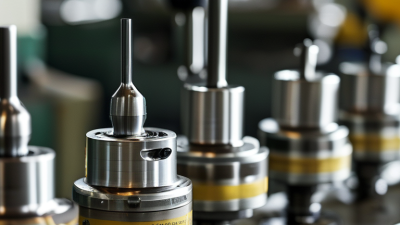
Tips: Check the tap shank diameter first. Then compare the collet’s capacity, gripping range, and torque rating. Inspect the collet for wear, chips, or uneven clamping. Clean contact surfaces before installation. Small debris can create visible thread errors.
In practical use, the best choice depends on the machine, tap geometry, material, and production speed. Softer materials may need smoother compensation. Harder materials often require stronger, more stable gripping. I once treated collet size as the main concern, but machine synchronization mattered more. That mistake was costly in time, not always in parts. Measure runout with a dial indicator when precision matters. Also test a sample hole before full production. A collet can look correct and still perform poorly under load. Reliable selection comes from specifications, inspection, and controlled trial cuts.
How to Choose the Right Tapping Machine Collets?
Tapping Machine Collet Types and Their Functions
This functional comparison helps match a collet design to the tapping process. A value of 1 indicates that the function is commonly built into the collet type, while 0 indicates that it is generally not its primary function. Actual performance depends on the specific toolholder, machine, tap size, and manufacturer specifications.
Evaluating Material, Accuracy, Clamping Force, and Durability
How to Choose the Right Tapping Machine Collets?
In daily machining, collet selection affects thread quality, tool life, and operator safety. Material choice matters under heat, coolant, and repeated tightening. Heat-treated alloy steel offers strong wear resistance for high-volume production. Stainless steel can resist corrosion in damp workshop conditions. Softer materials may protect delicate tool shanks, but they can deform sooner. Check the collet’s hardness, surface finish, and recommended operating range. I once chose a cheaper collet for light tapping. That assumption was wrong. Its jaws marked the shank after several cycles.
Accuracy starts with controlled runout. Measure the collet and holder together, not separately. A dial indicator can reveal uneven rotation near the tool nose. Even small errors may create oversized threads or poor surface finishes. Clamping force must hold the tap firmly without crushing it. Excessive force can damage thin shanks. Too little force can cause slipping during chip evacuation. Test the setup with the actual tap size and material. Record the results.
Durability depends on maintenance, loading, and cleaning. Remove chips before every installation. Inspect gripping surfaces for scratches, dents, and bright wear lines. A collet that looks acceptable may already lose consistent pressure. Replace damaged components instead of compensating with excessive tightening. Keep a simple inspection record. It exposes patterns that memory misses. Sometimes, the most reliable choice is not the hardest material, but the one that matches the machine, tap, and workload.
Choosing Between Fixed, Floating, Quick-Change, and Safety Collets
Choosing Between Fixed, Floating, Quick-Change, and Safety Collets
The right tapping machine collet depends on thread quality, tool movement, and changeover time. A fixed collet holds the tap firmly and suits rigid machines with stable alignment. It works well for repetitive jobs, especially when spindle and hole centers match closely. A floating collet allows limited axial or radial movement. This helps absorb small alignment errors and reduces tap breakage in uneven setups.
Quick-change collets reduce tool replacement time during mixed production. They are useful when operators switch thread sizes often. Safety collets add overload protection through controlled slip or release. They can protect taps when chips pack inside a blind hole. According to Deloitte’s 2024 Smart Manufacturing and Operations Survey, 92% of manufacturers view smart manufacturing as important for future competitiveness. That finding supports faster, more controlled tooling decisions, although speed alone cannot fix poor alignment.
Tips: Check the tap size, pitch, machine torque, and hole depth before buying. Match the collet’s capacity to the tap shank, not only the thread diameter. I have seen operators choose quick-change tooling for convenience, then lose accuracy through weak retention. A fixed collet may be better there. For difficult materials, test a safety collet first. Record breakage, cycle time, and thread gauge results. The best choice is sometimes less obvious. Recheck it after production begins.
Checking Compatibility, Maintenance Needs, and Total Operating Cost
Choosing the right tapping machine collet starts with compatibility, not price. Check the tap shank diameter, square-drive size, collet range, spindle interface, and machine speed. A collet may fit the holder but still allow axial movement. That small error can produce oversized threads, damaged taps, or rough entry marks. On a busy shop floor, I measure both the tap and holder before ordering. It takes minutes. Reworking a rejected part takes much longer.
Maintenance needs affect the real cost. Clean chips from the gripping area after each shift, then inspect the bore under bright light. Dull contact surfaces can reduce grip and increase tool runout. The U.S. Department of Energy’s Operations & Maintenance Best Practices Guide reports that preventive maintenance may reduce costs by 12–18% compared with reactive maintenance. That figure is not collet-specific, but the principle applies. Lubricant can also attract abrasive dust. More lubricant is not always better.
Calculate total operating cost over the collet’s expected service life. Include purchase price, cleaning time, setup delays, tap breakage, scrap, and replacement availability. McKinsey reports that predictive maintenance can reduce downtime by 30–50% and maintenance costs by 20–30% in suitable industrial settings. Use inspection records to test whether your shop sees similar results. The spreadsheet may still be wrong. Real cutting conditions often expose assumptions. A lower-priced collet can become expensive after repeated stoppages. A premium option is not automatically economical either. Track actual cycle counts, rejects, and maintenance hours before changing the standard.